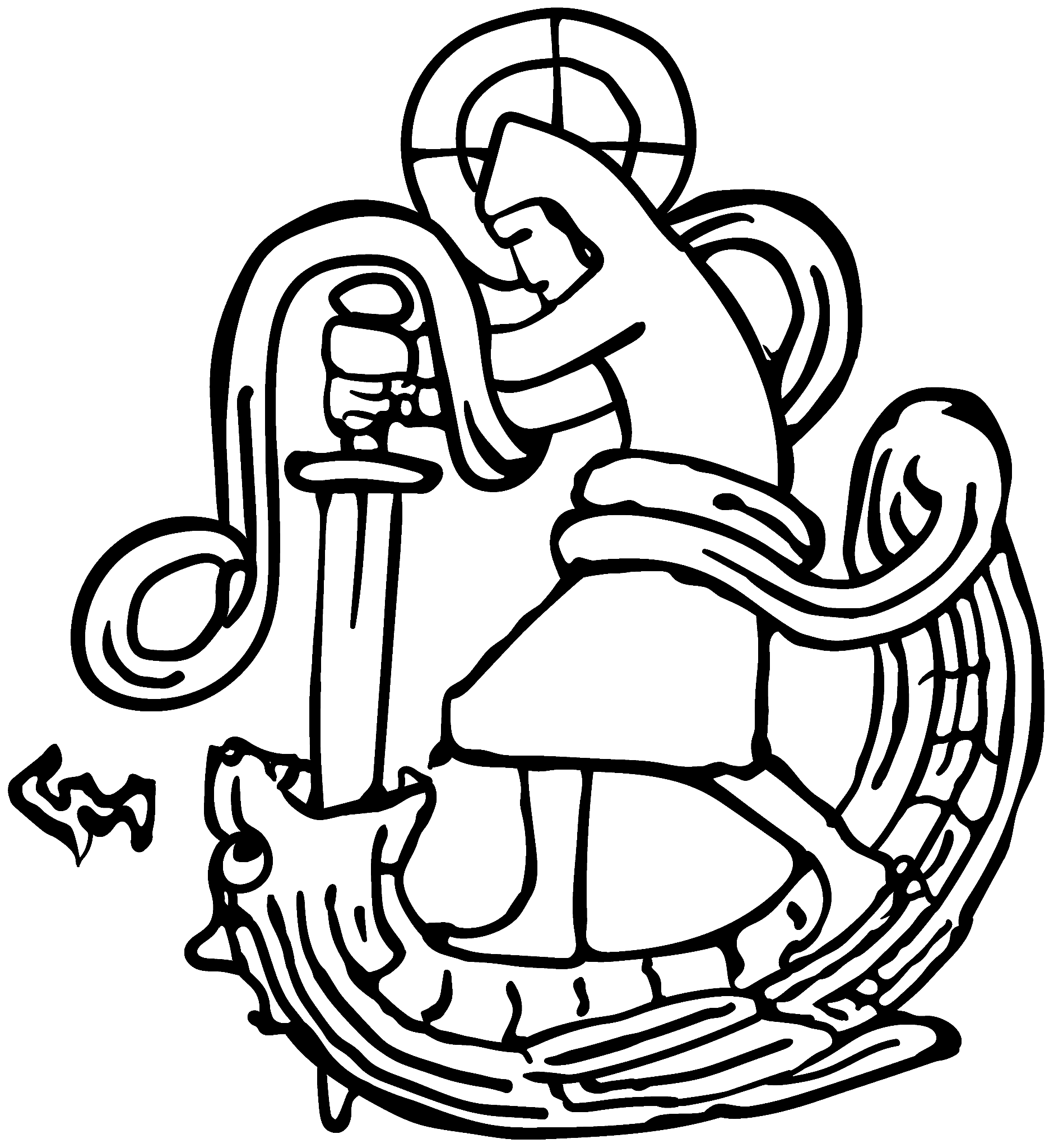
Saint Olaf, King of Norway
Saint Olaf is remembered as one of Norway's most influential medieval kings. His story occupies the meeting point of Scandinavian history, Christianity, and the imagery of legend.
The historical king
Olaf II Haraldsson ruled Norway in the early eleventh century. He was killed at the Battle of Stiklestad in 1030 and was subsequently venerated as a saint, becoming an important figure in Norway's religious and national history.
The historical record and later retellings do not always tell the same story. Over the centuries, Olaf's memory accumulated symbols and legendary details that made his image recognizable far beyond Norway.
A figure in medieval art
Medieval images of Saint Olaf often show him crowned, sometimes holding an axe, with a creature or dragon beneath his feet. Such creatures can represent defeated evil or aspects of the pagan past.
This stylized drawing evokes that tradition through its bold outlines, formal pose, and striking contrast.
A lasting Scandinavian symbol
References to Saint Olaf appear in churches, art, place names, and historical writing. The image appeals both to students of medieval history and to those interested in Norwegian and Nordic cultural heritage.
Products featuring this artwork
Explore merchandise featuring this illustration.