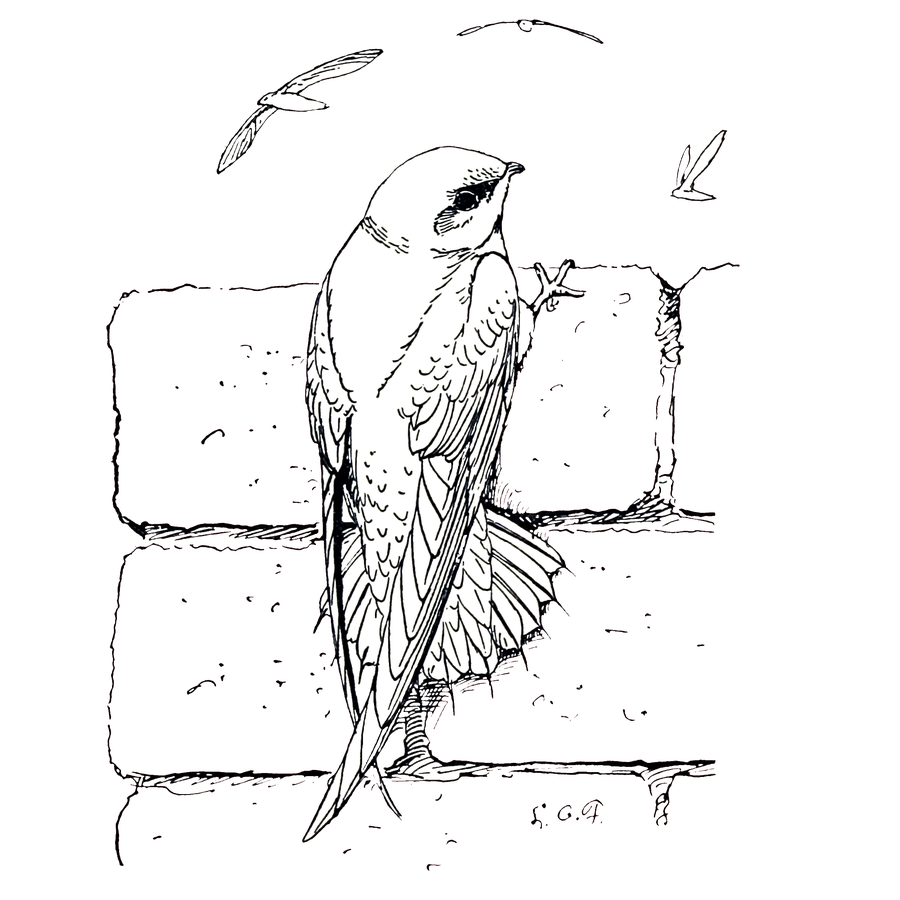
Chimney Swift
The Chimney Swift (Chaetura pelagica) seems almost made for the air. Its slender body, curved pointed wings, quick wingbeats, and sudden glides make it one of the most distinctive birds above eastern North American towns and neighborhoods.
A life on the wing
Chimney swifts belong to the swift family, Apodidae. They spend most daylight hours flying, catching tiny airborne insects such as flies, beetles, and moths. Often recognized by their sharp, chattering calls, they wheel over rooftops, rivers, and open spaces with an agility that can make them challenging to follow with the eye.
Unlike many backyard birds, chimney swifts cannot perch comfortably on ordinary horizontal branches or wires. Instead, they cling to rough vertical surfaces. Their short legs, strong claws, and stiff, spiny tail feathers help support them against the inside walls of chimneys and hollow trees.
Nesting in unexpected places
Before chimneys became common, these birds nested in large hollow trees and other sheltered vertical cavities. Many now depend on uncapped, suitably textured chimneys as places to nest and roost. A pair collects small twigs—sometimes snapping them from branches while flying—and fastens the twigs together and to the wall using sticky saliva. The result is a small, shallow nest attached to a vertical surface.
Both parents participate in raising the young. The chicks initially remain in the nest, then cling to the surrounding wall as they grow. This unusual upbringing is one more reason chimney swifts are unlike the songbirds we commonly see at feeders.
Migration and conservation
Each spring, chimney swifts return from wintering areas in South America to breed across much of eastern North America. In late summer and autumn, groups gather before their southward migration. At dusk, hundreds or even thousands may swirl together before funneling into a shared roosting chimney—an extraordinary sight for anyone fortunate enough to watch.
Chimney Swift populations have declined substantially. The loss of large hollow trees, capped or altered chimneys, and changes affecting flying insects all pose challenges. Preserving suitable nesting and roosting places, where safe and appropriate, is one way communities can help.
What makes this artwork distinctive
This black-and-white illustration brings the bird close enough to appreciate details that are difficult to see in flight. A single swift clings upright against the bricks, its folded wings and long body carefully delineated. Smaller swifts fly above it, giving the composition movement and linking the resting bird to its remarkable aerial life.
Its fine linework recalls traditional ornithological illustration. We are still verifying the image’s original publication date and artist attribution before adding a definitive historical credit.
Learn more about chimney swifts
For identification, nesting, migration, and conservation information, visit the Cornell Lab of Ornithology’s Chimney Swift guide or the National Audubon Society’s species guide.
Products featuring this artwork
Explore merchandise featuring this illustration.
Prototype page. Artwork attribution and additional merchandise formats will be reviewed before launch.